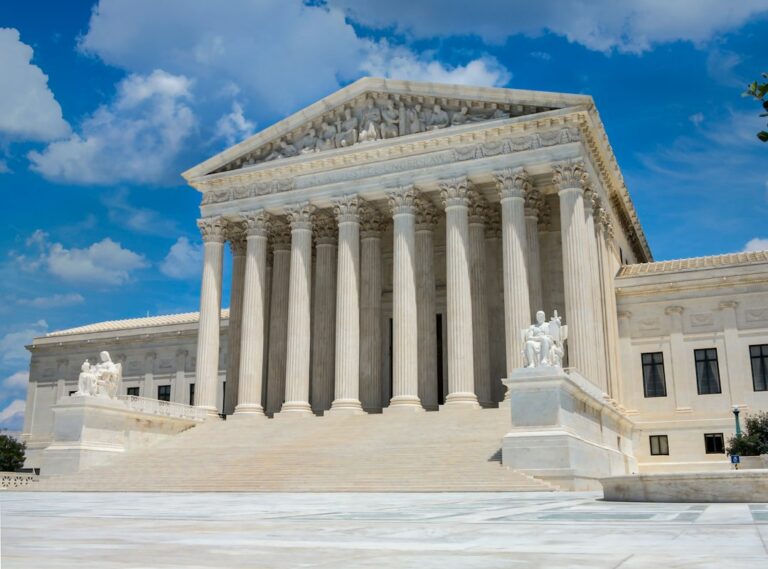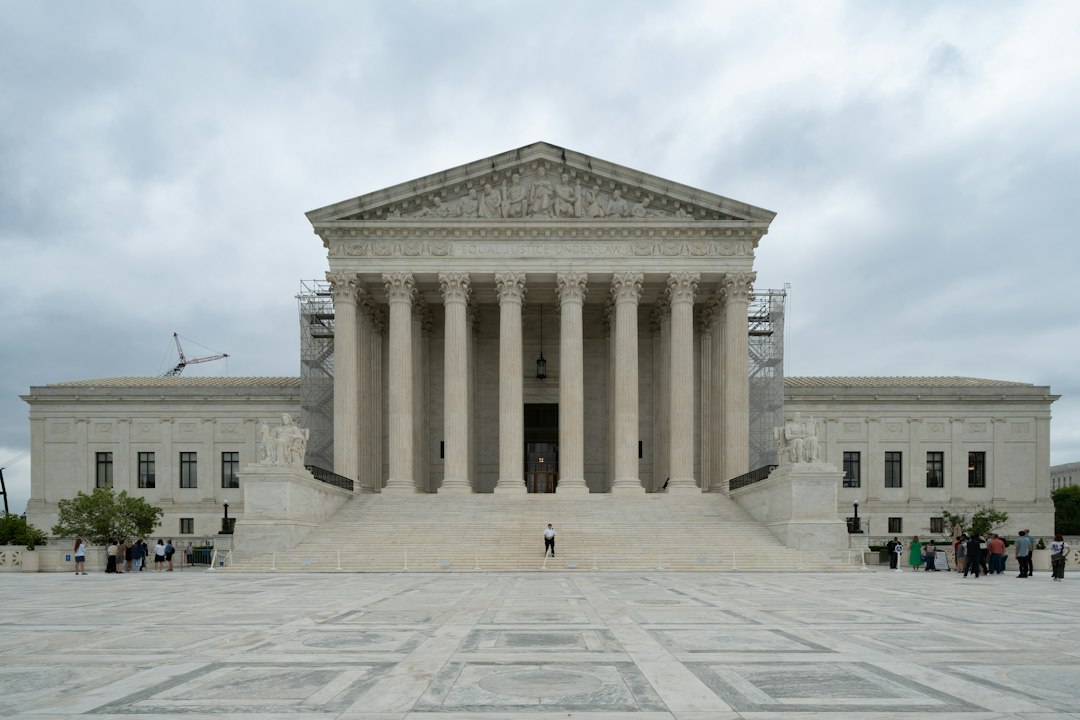
The Supreme Court’s new term is underway, and the docket includes disputes that could reshape federal power, immigration enforcement, gun regulation, election rules, religious liberty, and the relationship between state and federal law.
The Court formally began its October 2026 argument session on October 5. Official Supreme Court materials show the justices opened with Suncor Energy v. Commissioners of Boulder County, followed by other cases scheduled across the opening weeks.
Immigration remains a major legal battleground
Immigration cases continue to reach the Supreme Court because the administration’s enforcement policies frequently raise questions about detention authority, removal procedures, due process, and the power of federal agencies.
Associated Press reporting on the new term identified immigration disputes among the major issues before the Court, including questions involving detention and removal procedures. Those cases could determine how much flexibility the executive branch has to hold or remove noncitizens while legal challenges are pending.
The details matter. A Supreme Court decision can be broad or narrow, and a ruling on one statutory procedure does not necessarily resolve every dispute involving immigration enforcement.
Gun-rights cases could test the reach of the Second Amendment
The Court is also expected to address challenges involving state restrictions on semiautomatic rifles. Gun-rights disputes have become more consequential since the Court emphasized a history-and-tradition framework for evaluating firearm regulations.
The next round of cases may clarify how lower courts should apply that framework to modern weapons and state restrictions. A ruling could affect laws well beyond the state directly involved in the case.
Voting rules are back before the justices
Election law remains another major area to watch. AP reported that the term includes disputes over Arizona voting provisions involving proof-of-citizenship requirements and voter-roll rules.
These cases sit at the intersection of state election administration, federal voting protections, and constitutional rules governing elections. The legal questions can be technical, but the consequences can directly affect how voters register and remain eligible.
Because election-law disputes are politically sensitive, readers should distinguish legal holdings from partisan claims about what a case supposedly proves. The controlling rule comes from the Court’s written decision and the statutes or constitutional provisions it interprets.
Religious liberty and anti-discrimination law
The Court’s docket also includes a dispute involving a Catholic preschool and Colorado’s universal preschool program. The case raises questions about religious exercise and government funding in a program that also applies anti-discrimination requirements.
Religious-liberty cases often require the Court to balance constitutional protections against rules that governments apply to public programs. The precise wording of the final opinion will matter for schools, faith-based organizations, and state benefit programs around the country.
The Court’s emergency docket remains under scrutiny
Beyond the cases receiving full oral argument, the Supreme Court continues to face a large number of emergency applications. These requests can ask the justices to pause or reinstate lower-court rulings while litigation continues.
Justice Samuel Alito recently discussed the growth of emergency appeals and the pressure they place on the Court. That procedural issue has become especially important because major federal policies can change quickly depending on whether a lower-court order remains in effect during an appeal.
How to follow the term without the political noise
The Supreme Court publishes argument calendars, dockets, orders, transcripts, audio, and opinions on its official website. Those records are the best place to verify what the Court actually heard or decided.
News coverage is useful for explaining context, but readers should be skeptical of social-media posts that announce a “Supreme Court ruling” when the justices have only agreed to hear a case, asked questions at oral argument, or issued a temporary order.
Decisions will arrive over months, not days
The Court’s term runs through the middle of 2027, and the most consequential opinions often arrive late in the term. Some cases may be resolved narrowly, while others could produce rules that reshape national policy for years.
For now, the opening week confirms that the Court will once again sit at the center of several of the country’s most important political and legal disputes.
Sources reviewed: Supreme Court of the United States; Supreme Court 2026 orders; Associated Press overview of the 2026 term.