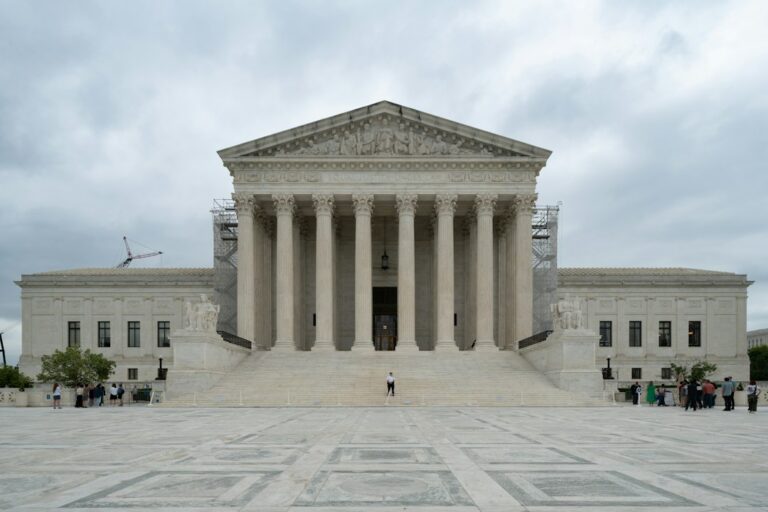
The U.S. Supreme Court opened a new term with a case that could affect dozens of climate-related lawsuits around the country: Suncor Energy (U.S.A.) Inc. v. Commissioners of Boulder County.
The justices heard oral argument on October 5. The case asks whether Colorado local governments may pursue state-law claims against major energy companies over alleged climate-related harms, or whether federal law prevents those claims from going forward.
What the case is about
Boulder County and other Colorado local governments sued Suncor and ExxonMobil, alleging that the companies contributed to climate-related harms and misled the public about risks associated with fossil fuels. The plaintiffs are seeking compensation for costs they say are tied to effects such as wildfire risk, flooding, infrastructure damage, and other climate impacts.
The companies argue that claims focused on global greenhouse-gas emissions cannot be governed by a patchwork of state tort laws. Their position is that federal law, including the federal framework governing air pollution and interstate emissions, displaces or preempts the state-law theories being used against them.
The Colorado Supreme Court allowed the case to proceed, and the companies brought the dispute to the U.S. Supreme Court.
The Trump administration is backing the companies
The federal government is participating as a friend of the court in support of the energy companies. The Supreme Court granted the Solicitor General time to participate in oral argument, according to the Court’s official docket.
The Justice Department has argued that the case raises important federal questions because the alleged injuries arise from global emissions and energy production that cross state and national borders.
That position does not automatically determine the outcome. The justices must decide how state tort law, federal environmental law, and federal common-law principles interact in this particular dispute.
Why the case could reach far beyond Colorado
Reuters reported that nearly 60 similar climate-related suits are pending around the country. Cities, counties, and states have increasingly turned to litigation in an effort to recover costs they associate with climate change. Energy companies have responded by arguing that those cases improperly ask state courts to regulate nationwide or global emissions policy.
A broad Supreme Court ruling for the companies could make it more difficult for many of those cases to proceed. A ruling favoring Boulder could preserve a wider path for states and local governments to use traditional state-law claims such as nuisance or misrepresentation.
The justices pressed both sides
During oral argument, the Court confronted questions about federalism, the reach of state law, and the consequences of allowing one state’s courts to impose liability for conduct with effects beyond that state’s borders.
The justices also examined the opposite concern: whether moving too much of the dispute into federal law would improperly cut off legal remedies that states have traditionally administered through their own courts.
Justice Samuel Alito did not participate in the case. The Supreme Court’s official docket and oral-argument materials show the case was argued as No. 25-170.
This is not a final ruling
The October 5 hearing was oral argument, not a decision. The justices can take months to issue a final opinion. A ruling is expected during the Court’s current term, which generally runs into the following summer.
Readers should also be cautious about headlines suggesting that the Court has already ruled for either side. Questions asked during oral argument can reveal what issues concern the justices, but they are not votes and do not always predict the final outcome.
What comes next
The Court will now consider the written briefs, the lower-court record, and the arguments presented by the parties and the federal government. When a decision is issued, the controlling legal rule will come from the Court’s written opinion, not from campaign statements or commentary about the hearing.
Because the case touches energy policy, state power, climate litigation, and the role of federal law, the final ruling could become one of the most consequential business and federalism decisions of the term.
Sources reviewed: U.S. Supreme Court docket, No. 25-170; Supreme Court 2026 argument transcripts; U.S. Department of Justice brief; Reuters, October 5, 2026.